


BOOK REVIEW | I Sell Aircraft – No ‘Plane’ Business
David M. Dixon’s memoir offers a rare glimpse into the people, politics and persistence behind the business of selling aircraft.
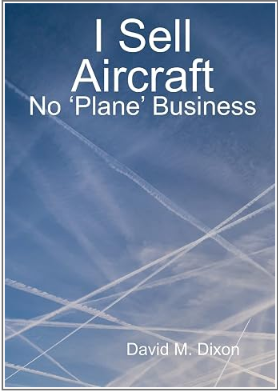
BOOK DETAILS
Title: I Sell Aircraft – No ‘Plane’ Business.
Author: David M. Dixon.
Publisher: Corporate Jet Investor.
Published: 2020.
Format: Paperback.
Pages: 308.
ISBN: 9781716874604.
ABOUT THE AUTHOR
David M. Dixon is a veteran aircraft salesman with more than five decades of experience in aerospace. He began his career with Britten-Norman in 1972, selling aircraft in Africa, before moving to Short Brothers and subsequently Bombardier. His career later took him deep into business aviation and the Asian market. He joined Jetcraft in 2012 and is now Executive Chairman of Jetcraft Asia. He is a Fellow of the Royal Aeronautical Society and was awarded an MBE in 1977 for his contribution to British exports.
Buy the book: Amazon India – *I Sell Aircraft – No ‘Plane’ Business*
Plenty of books are about aircraft. There are books about designing them, flying them, crashing them and financing them. Far fewer focus on the people whose job is to persuade someone to spend millions of dollars buying one.
That is what makes David M. Dixon’s I Sell Aircraft – No ‘Plane’ Business unusual.
The book is a memoir of a 48-year career selling aircraft, beginning with an advertisement in Flight International in 1972. Three months later, Dixon joined Britten-Norman. His first major sale was a set of Trislanders to Sierra Leone Airways. He went on to sell aircraft across Africa and Asia, including Shorts aircraft, before moving into Bombardier’s Challenger, Regional Jet and Dash 8 programmes and, eventually, business jets.
What makes the story interesting is that Dixon quickly discovers that selling an aircraft is nothing like selling an ordinary product.
An aircraft is an extraordinarily expensive, technically complicated asset. The customer is not simply buying an aeroplane. He is buying the manufacturer’s reputation, its ability to support the aircraft, its financial stability and, ultimately, the confidence that the machine will still be supported years after the cheque has been signed.
Dixon’s career provides a ringside view of that world.
His years in Africa are particularly fascinating. They coincide with the political turmoil of the 1970s and 1980s, and the book shows how wars, coups, economic instability and changing governments could make the apparently straightforward business of selling an aircraft anything but straightforward. The Royal Aeronautical Society’s review describes the book as a journey through Africa, Asia and Russia, highlighting both the geographical challenges and the highly localised problems aircraft salesmen encountered.
The book also includes episodes involving aircraft accidents, political intrigue, and larger-than-life customers. One contemporary review described some episodes as resembling a James Bond script, which is not entirely fanciful given the cast of presidents, prime ministers, royalty, and wealthy businessmen Dixon encountered.
Yet the book’s greatest value lies in its less glamorous observations.
Dixon shows that the aircraft salesman is often selling trust as much as technology. This matters most when the manufacturer itself is under financial pressure. How do you persuade a customer to spend millions on an aircraft when the company producing it is struggling? How do you maintain confidence when a takeover or corporate restructuring suddenly changes the people and organisation behind the product?
These are questions that illuminate the wider aviation business.
The China chapters are especially relevant. Dixon arrived in China in the early 1980s, when the country’s aviation market was still in its infancy. He subsequently witnessed its extraordinary economic expansion and the emergence of business aviation across Asia. The book therefore doubles as a personal account of a remarkable period in the development of Asian aviation.
This is not, however, a book about airline economics. Readers looking for a detailed analysis of aircraft leasing, airline profitability, fleet economics or the Airbus-Boeing duopoly will not find it here.
Its value is different.
It gives aviation a human face.
The Royal Aeronautical Society called it an interesting, light read that fills a gap in aerospace literature by offering insight into the sales side of the industry. That is a fair assessment.
For aviation professionals, journalists and anyone curious about what happens behind the enormous transactions that keep the aviation industry moving, I Sell Aircraft is worth picking up.
The aircraft may be the product. But Dixon makes clear that the real business is relationships, persistence, timing and trust.
Verdict: 4/5.